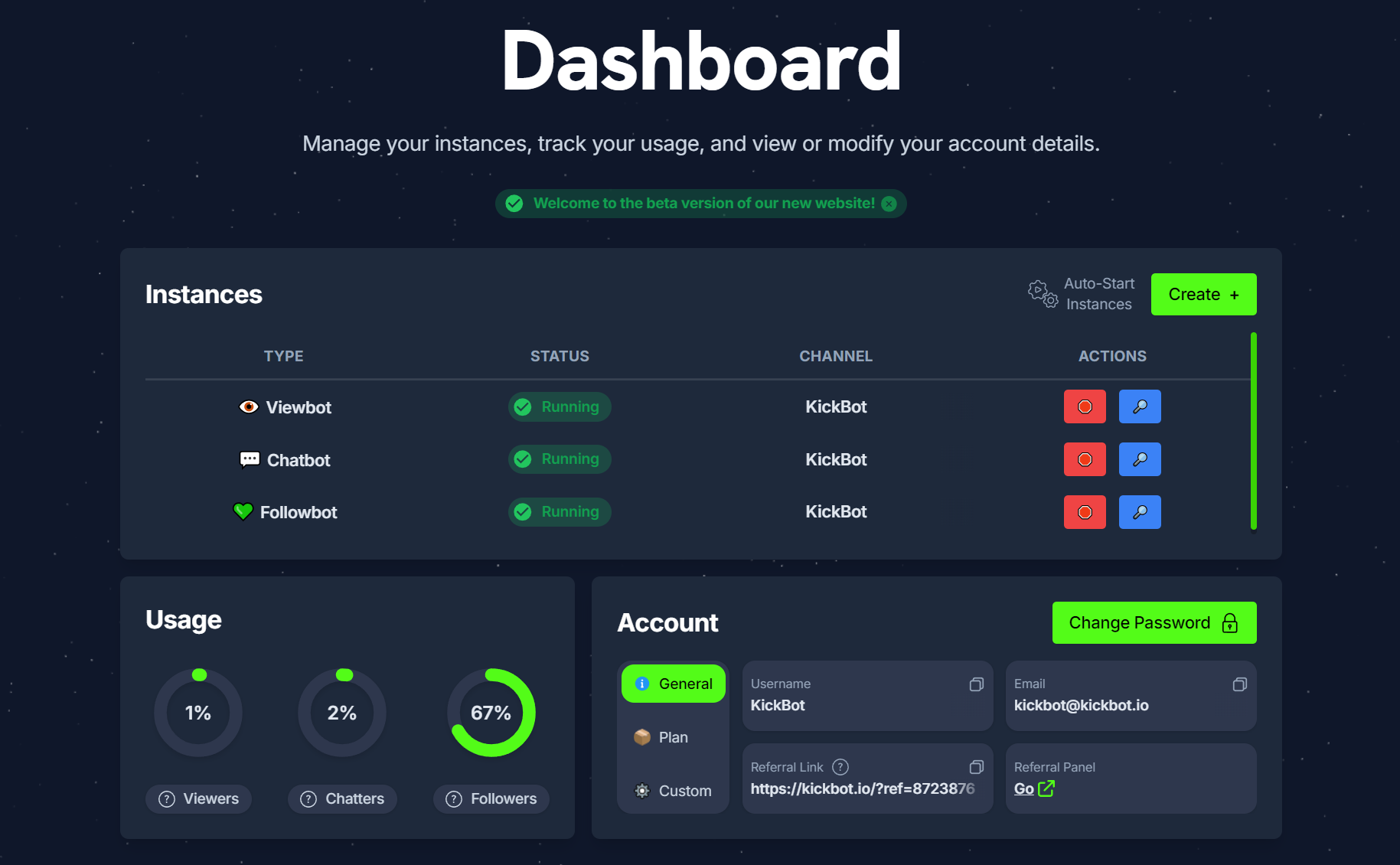
As you venture into the world of bot services, you’re likely wondering how to gauge the success of these automated interactions. You’ve invested time and resources, but now it’s crucial to analyze the kick growth generated by these efforts. You need to know: Are your engagement rates soaring? Are conversions happening at a higher rate? And, most importantly, is your revenue growing as a result? By examining these key performance indicators, you’ll uncover the answers and gain valuable insights to refine your strategy, optimize your approach, and ultimately drive tangible results. But where do you start?
Understanding Bot Services and Kick Growth
One key factor contributing to kick growth is the integration of bot services. You’re likely wondering how these automated tools can boost your online presence.
The answer lies in their ability to simulate human-like interactions, freeing up your time to focus on high-leverage activities. By automating tedious tasks, how to viewbot on kick help you scale your online efforts, increasing your reach and visibility. They can engage with users, respond to queries, and even generate content, all while you’re busy strategizing or attending to other critical tasks.
As you integrate bot services into your workflow, you’ll start to notice a significant uptick in engagement. Your followers will appreciate the prompt responses, and your content will start to resonate with a wider audience.
This, in turn, will drive more traffic to your platform, ultimately contributing to kick growth. By leveraging bot services, you’re not only saving time but also creating a more efficient, scalable, and effective online strategy.
Measuring the Impact of Bot Traffic
You’ve successfully integrated bot services into your workflow, and now you’re seeing a notable increase in engagement.
But, it’s crucial to measure the impact of bot traffic to understand its effects on your growth. You need to assess whether the increased engagement is translating into meaningful interactions or just artificial inflation.
To do this, you should track metrics that provide insight into user behavior, such as time on site, bounce rate, and pages per session.
These metrics will help you determine if users are genuinely interested in your content or if they’re simply clicking through due to bot activity.
Additionally, analyze the quality of engagement, including likes, comments, and shares.
This will give you a better understanding of whether bot traffic is driving real conversations or just superficial interactions.
Identifying Key Performance Indicators
Dig into your analytics to uncover the key performance indicators (KPIs) that truly matter for your bot-driven growth.
You’ll want to identify metrics that give you a clear picture of how your bot services are performing and where you need to make adjustments. Start by tracking engagement metrics like conversion rates, click-through rates, and bounce rates to see how users are interacting with your content.
Then, analyze your traffic metrics, such as unique visitors, page views, and average session duration, to understand how your bot traffic is impacting your website’s overall performance.
Next, examine your revenue metrics, like return on investment (ROI) and cost per acquisition (CPA), to see if your bot services are generating the revenue you expected.
Don’t forget to track your customer metrics, such as customer lifetime value (CLV) and retention rate, to understand the long-term impact of your bot-driven growth.
Optimizing Strategies for Maximum ROI
By refining your bot services to align with your key performance indicators, you’re poised to maximize your return on investment (ROI).
This optimization process involves tweaking your bot’s settings, adjusting its messaging, and fine-tuning its targeting. You’ll want to focus on the metrics that matter most to your business, whether it’s conversion rates, engagement, or revenue growth.
To get the most out of your bot, you’ll need to continuously monitor its performance and make data-driven decisions.
This might involve A/B testing different messaging strategies, experimenting with new features, or adjusting your targeting to reach higher-value audiences. By doing so, you’ll be able to identify areas of improvement and capitalize on opportunities for growth.
Real-World Examples and Case Studies
As you refine your bot services to optimize ROI, it’s natural to wonder how others have achieved success with their own chatbot strategies.
You’re not alone in seeking inspiration from real-world examples and case studies. Let’s dive into a few notable ones.
Take, for instance, the case of American Express. By integrating a chatbot into their customer service, they saw a 50% reduction in response time and a 25% increase in customer satisfaction.
Another example is Whole Foods Market, which used a chatbot to help customers find recipes and products in-store. This led to a significant increase in engagement and sales.
These examples demonstrate how chatbots can drive tangible results.
By analyzing their strategies and incorporating similar tactics into your own approach, you can replicate their success.
Remember to identify the specific pain points your chatbot aims to solve and tailor your strategy accordingly.
Conclusion
You’ve analyzed kick growth after using bot services and now it’s time to put your insights into action. By tracking engagement rates, conversion rates, and revenue growth, you’ve identified areas for improvement and opportunities to maximize ROI. Refine your strategies, adjust messaging, and optimize targeting to drive tangible results. With continuous monitoring and data-driven decisions, you’ll increase customer satisfaction and sales, ultimately capitalizing on the full potential of bot services.
About the Author